Skip to content
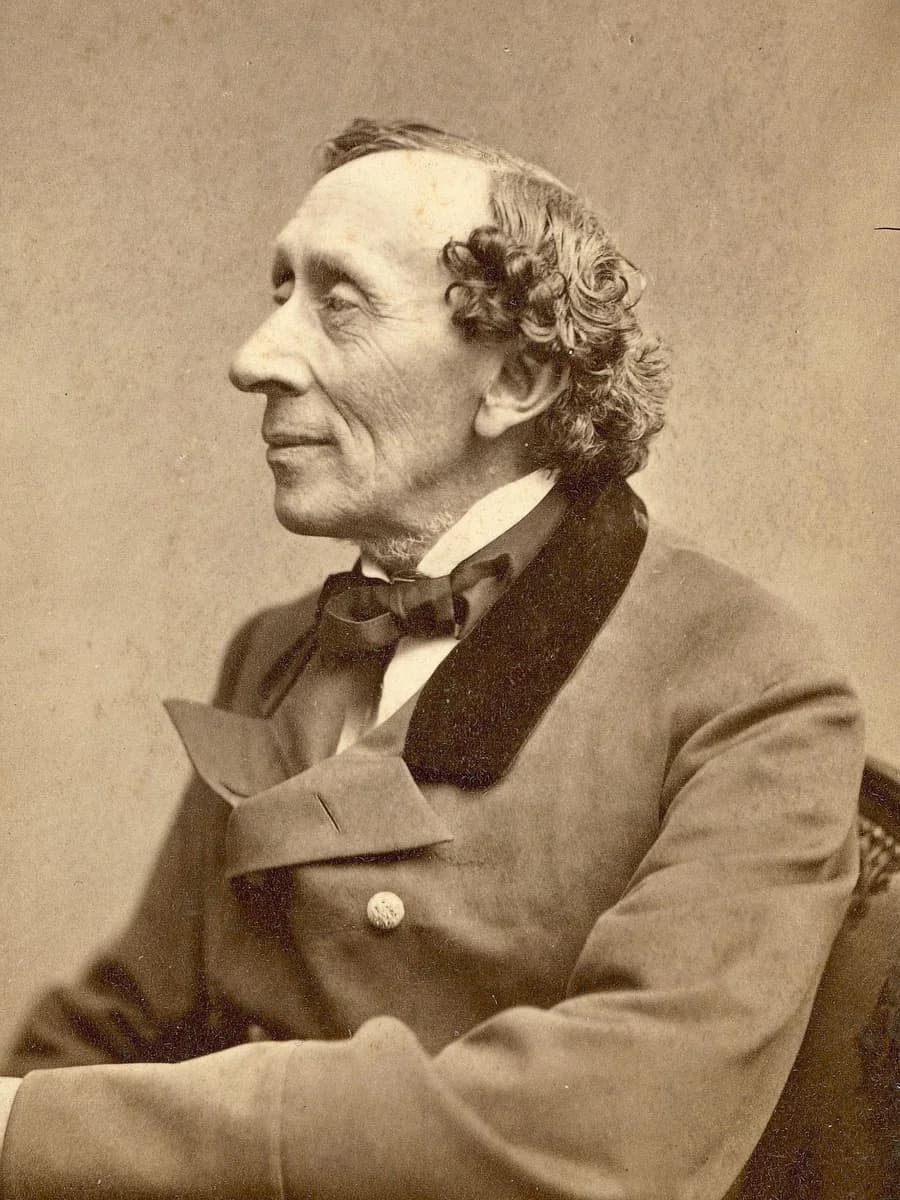
Photograph of Hans Christian Andersen, 1869
Thora Hallager, 1869 · public domain · Wikimedia Commons

Historical voices

Hans Christian Andersen

1805–1875

Denmark's great teller of literary fairy tales.

Born
2 April 1805 · Odense, Denmark
Died
4 August 1875 · Rolighed, a country house near Copenhagen
Nationality
Danish
  • fairy tales
  • Denmark
  • folklore
  • children's literature

A reference author. Valice Press has no connection with Hans Christian Andersen, their publishers or their estate. Hans Christian Andersen appears here as part of the reading context around the shelf.

Biography

The life, briefly

Hans Christian Andersen was born in Odense and wrote plays, travel books, novels and poems all his life, but it is the fairy tales that made him. His 156 stories, collected in nine volumes, have been translated into more than 125 languages.

Some of the tales rework folk stories he knew from childhood; many are his own inventions. They are told to children and, at once, over their heads to the adults in the room.

Works

Major works

  1. 1835Fairy Tales Told for Childrenthe first booklet, with "The Tinderbox" and "The Princess and the Pea"
  2. 1835The Improvisatorehis first novel
  3. 1837The Little Mermaid and The Emperor's New Clothesthe third booklet of Fairy Tales Told for Children
  4. 1843The Ugly Duckling
  5. 1844The Snow Queen
  6. 1845The Little Match Girl

Timeline

Turning points

  1. 1805

    Born in Odense, Denmark.

  2. 1829

    Had his first real success with the short story "A Journey on Foot from Holmen's Canal to the East Point of Amager".

  3. 1835

    On 8 May published the first booklet of fairy tales, and in the same year his first novel, The Improvisatore.

  4. 1837

    On 7 April published the booklet with "The Little Mermaid" and "The Emperor's New Clothes".

  5. 1875

    Died at the age of 70 at Rolighed, the country house near Copenhagen of his friends the Melchiors.

Why they are here

Hans Christian Andersen and the shelf

Relevance

Andersen sits where folklore turns into literature: he retold tales he had heard and then made new ones that read as though they had always existed. For anyone who reads fairy mythology, he is the author who showed how far a single writer could take the form.
Influence

His tales have been adapted into ballets, plays, animated films and live-action films, and several of them — the mermaid, the match girl, the snow queen — are now part of the common stock of Western story.

Nearby on the shelf

If you read this, you might look here

Sources

Where this comes from

Everything on this page about Hans Christian Andersen is written from these sources, not from memory. Their dates and key claims were checked against the sources on 8 October 2026.The life dates are compared across Wikidata and the Library of Congress’s authority records.