There is a particular kind of fact that travels well: short, surprising, and about something old. Board games attract them the way shipwrecks attract treasure stories. Almost none of the good ones survive contact with a source.
What follows is the list we compiled while researching The Great Book of World Games. Each entry is a claim you will find repeated in popular writing, followed by what the earliest sources say instead. We printed it in the back of the book under the heading Invented Traditions, because a reader who has been told one of these deserves to know where it came from.
1. "Hopscotch was invented by Roman soldiers as drill practice."
No source supports it. The claim appears in modern popular writing and in no early collection of children's games. Alice Bertha Gomme, who gathered the English forms in the 1890s from correspondents across the country, records neither the story nor a Roman origin — and she was the sort of collector who would have noted it. The game is first described in English sources long after Rome.
The Roman-soldier version has a shape that should make you suspicious: it explains a children's game by way of the army, which is a very Victorian instinct, and it supplies a purpose for something that never needed one.
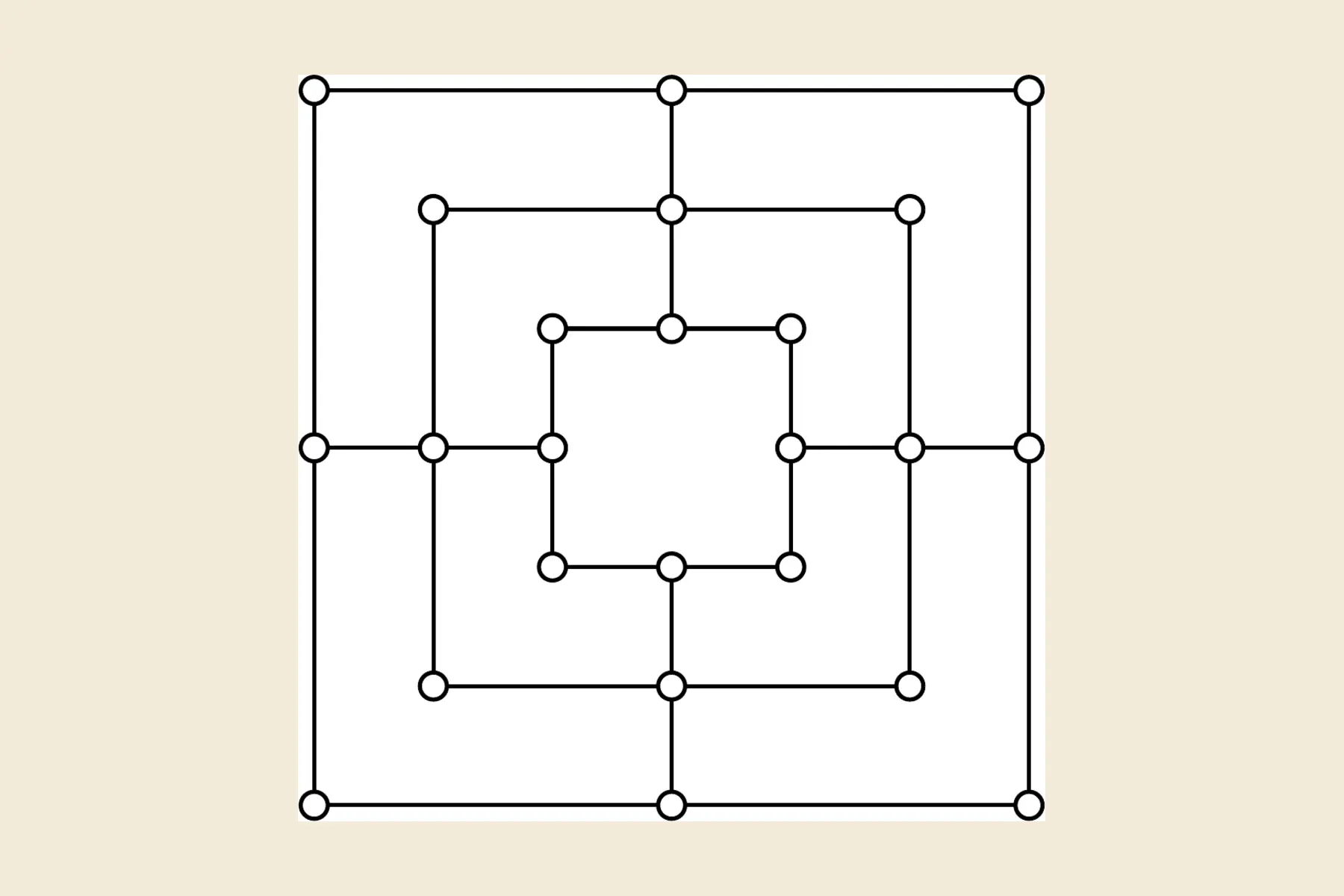
2. "The Temple of Kurna carries a morris board cut in 1400 BC."
The board exists; the date does not. Diagrams cut into temple paving cannot be dated by the date of the paving. A grid scratched into a stone floor may have been cut the year the floor was laid or the year before last; the stone carries no evidence either way. This is not a quibble about precision — it is the difference between a fact and a guess wearing a fact's clothes.
Our book prints the Kurna board. It does not print the date.
3. "Kalah is an ancient African game."
It is an American commercial game of the 1940s. Kalah was designed and marketed in the United States. It borrows the sowing mechanism of the much older African mancala family — which is genuinely ancient and genuinely African — but it is not one of them, and the board most Western players know is not a board anyone in Africa was playing on.
The real mancala games are more interesting than Kalah anyway. There are hundreds of them.
4. "Chinese checkers is Chinese."
It is German, and from 1892. The game was published in Germany as Stern-Halma — a star-shaped variant of Halma, itself an American game from the 1880s. The Chinese name was applied later as a selling point in the United States, at a moment when "Chinese" on a box was thought to sell games.
5. "Chess began as a four-handed Indian game played with dice."
The game is real. The genealogy is not. Duncan Forbes built his 1860 History of Chess on the argument that the four-handed dice game chaturanga is the original from which every other chess descends, and that the familiar two-handed game is a later simplification.
H. J. R. Murray took the case apart in 1913. The four-handed form is the later variant, not the ancestor; the two-handed game is the older of the two. Forbes's version is still repeated, because it is a better story: it has dice in it, and four kings.
6. "The elephant in early Indian chess moved like a queen."
A translator's slip, corrected by the next translator. Sir William Jones and the Brahman Radha Kant rendered the Sanskrit as "the Elephant moves in all directions as far as the driver pleases", which would give the piece the modern queen's power and make early Indian chess a wilder game than it was.
Forbes showed the word is chatushtayam — in the four cardinal directions. The elephant moved as a rook. Forbes also noted, in passing, that the modern queen's move is not much older than three and a half centuries, which is the more surprising fact and gets repeated far less.
7. "Every board scratched on a stone is a game board."
Some are; most cannot be shown to be. Scratched grids appear on temple floors, roof slabs and quarry blocks across the ancient world, and every one of them gets photographed and captioned as a game. Without pieces, a text, or a burial context, a grid is a grid. It might be a game. It might be a mason's setting-out, a tally, or an idle afternoon.
Why we bothered
You can write a book about traditional games without doing any of this. Most do. The stories are good, the sources are inconvenient, and no reader is going to check.
But a games book is a practical book — someone is going to sit down and play from it — and a reader who discovers that the history was decorative starts wondering whether the rules were too. Getting the provenance right is how the rules earn their credibility.
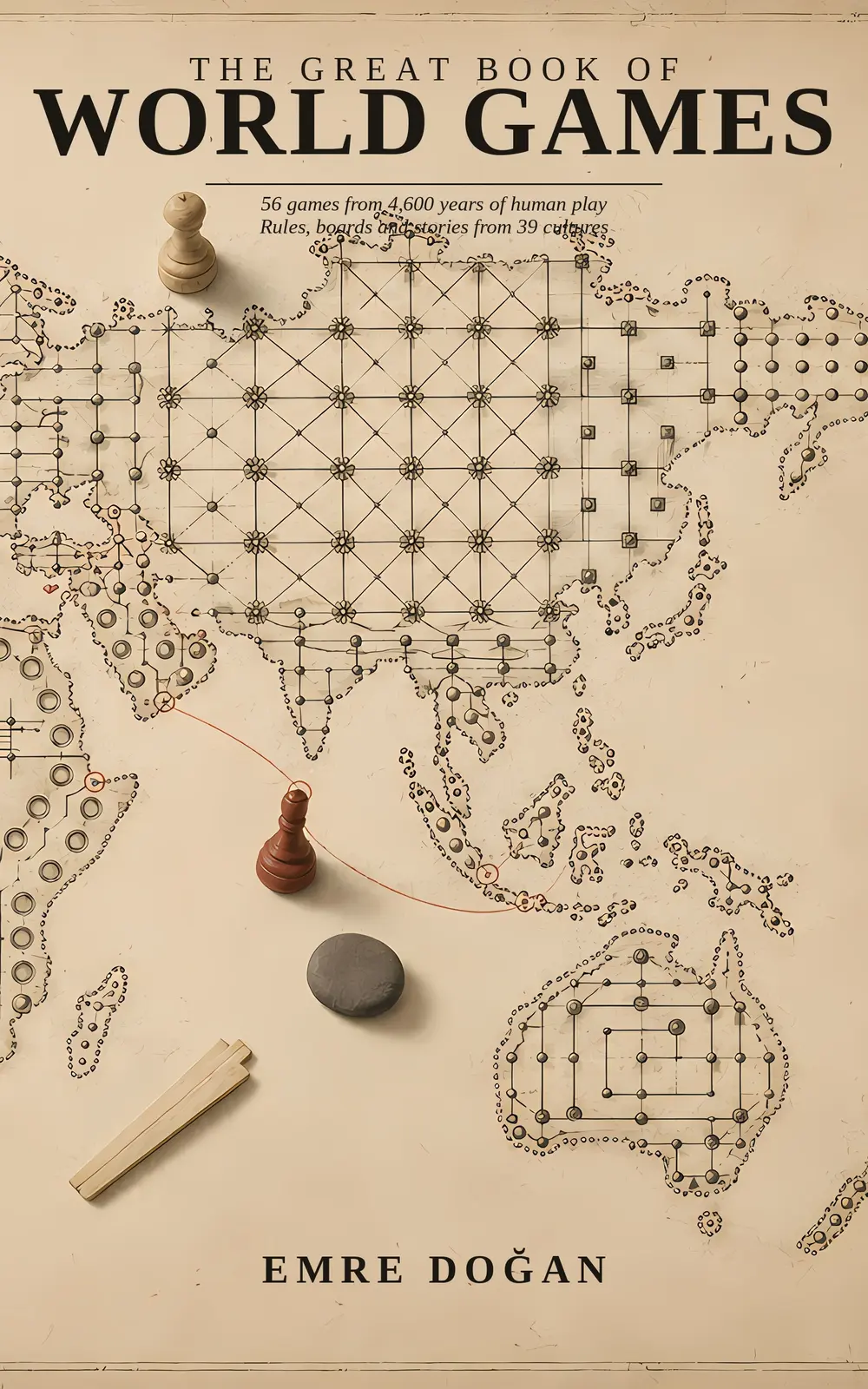
The Great Book of World Games collects 63 games from 42 cultures, each with its sources stated, rules written to be played from tonight, and board diagrams you can actually use. The seven claims above are printed in its back matter.
The boards are free. All 52 board templates, at full playing size, one per sheet — plus culture cards, score sheets and the index of games — are at valicepress.com/companion/world-games. Nothing to sign up for, no email asked. Print what you want and play.